
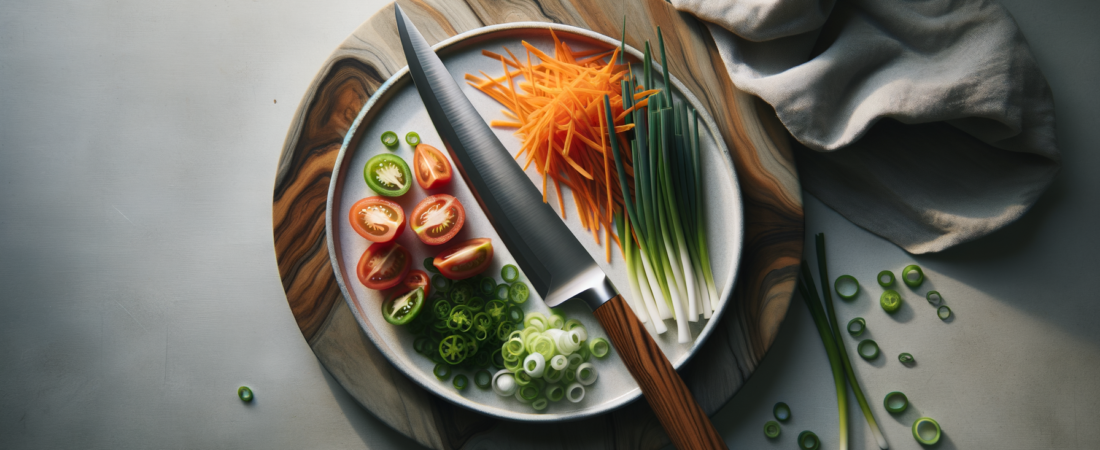
Knife Skills 101: Master Essential Cuts Easily
Have you ever struggled to slice an onion and ended up with uneven pieces everywhere? You’re not alone. Did you know that according to a kitchen safety survey, nearly 30% of home injuries are due to improper knife handling? Mastering basic knife skills is an essential foundation for any home cook, ensuring safety and efficiency in the kitchen. Let’s dive into the essential cuts every home cook should know and how to perfect them.
4 min read
In This Article
What are the Basic Knife Cuts Every Cook Should Know?
The art of cooking starts with how you cut your ingredients. Whether you’re preparing a quick salad or a gourmet dinner, knowing the basic knife cuts can enhance both the visual appeal and flavor of your dishes. Here’s a guide to the essential cuts:
- Chopping: Ideal for roughly sized pieces. Perfect for informal presentations.
- Dicing: Creates uniform, small cubes. Great for soups and stews.
- Julienne: Produces thin, matchstick-sized strips. Commonly used for stir-fries and salads.
- Chiffonade: Involves rolling and slicing leafy greens into thin ribbons. Ideal for garnishes.
- Mincing: Results in tiny pieces, typically for garlic or herbs.
How to Properly Dice an Onion?
Dicing an onion can be daunting for many, but it’s one of the most common kitchen tasks. To achieve perfect diced onions:
- Cut the onion in half through the root.
- Peel back the skin while keeping the root intact.
- Lay the half onion flat, slice horizontally, then vertically.
- Finally, chop across the onion, resulting in dice-sized pieces.
Common Mistakes to Avoid
Many beginners make mistakes such as cutting too close to the root or not using the correct grip on the knife. Always ensure the knife is sharp and your fingers are safely tucked away.
Handpicked items you might love



Why Learn the Julienne Cut?
The julienne cut is perfect for adding texture and aesthetics to your dishes. This thin slicing technique is ideal for carrots, peppers, and cucumbers, offering a uniform cook and impressive presentation.
Step-by-Step Julienne
- Trim and peel your vegetable.
- Slice into even segments (usually 2-3 inches long).
- Cut lengthwise into thin, uniform strips.
“Did You Know? The term ‘julienne’ originated from the French chef Jean-Julienne in the 18th century.”
How Can You Master the Chiffonade Technique?
The chiffonade technique is all about elegance and precision, primarily used for leafy greens and herbs like basil or spinach. Here’s how:
- Stack the Leaves: Pile the leaves on top of each other, largest at the bottom.
- Roll the Stack: Tightly roll the leaves into a cylinder.
- Slice Thinly: Cut across the cylinder to create thin ribbons.
Pro Tips
- A sharp knife is crucial for clean cuts.
- Keep your thumb tucked behind the fingers of your other hand to avoid injuries.
How to Mincing Techniques Differ for Garlic and Herbs?
Mincing is used to cut ingredients into the finest pieces possible. For garlic, start by crushing the clove with the side of your knife before slicing and mincing finely. Herbs, on the other hand, should be gently chopped to avoid bruising.
Practice is key—taking your time will lead to finely minced ingredients without a mushy result.
What’s the Best Way to Hold a Knife for Safety?
A common query among budding chefs is the safe method of holding a knife. Encouraging proper technique will prevent accidents and improve efficiency.
- Pinch Grip: Hold the knife where the blade meets the handle with your thumb and forefinger, wrapping other fingers around the handle.
- Guide Hand: Your non-dominant hand guides the food being chopped, with fingers tucked like a claw.
Printable Knife Skills Practice Routine
- Practice dicing onions with a consistently sharp knife.
- Julienne practice with firm vegetables like carrots or potatoes.
- Test chiffonade techniques with basil or mint for garnishing.
You Might Also Like
Ready to tackle more ambitious recipes? Understanding and perfecting these knife skills will certainly make cooking a more enjoyable and rewarding experience. So grab your knife and start practicing these essential cuts today! For the best kitchen tools to enhance your skills, explore our latest collections and share your experience in the comments below.
Written by Editorial Team
Our editorial team is dedicated to bringing you the latest insights, tips, and product recommendations.